
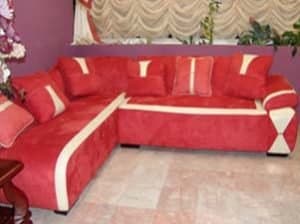
A well-upholstered piece of furniture should last twenty years or more. We regularly work on chairs that were last covered in the 1980s and are structurally as sound as the day they were built. The difference between fabric that lasts a decade and fabric that wears out in three years usually comes down to a handful of simple habits.
Here's what we tell every client who picks up a finished piece from our shop.
1. Vacuum weekly, yes, really
Dust and grit are abrasive. Every time you sit down, tiny particles grind against the fibers like fine sandpaper. A quick pass with a soft brush attachment once a week removes the grit before it can cut into the weave. Pay extra attention to seams, tufting, and the crevice where the seat meets the back.
2. Rotate and flip loose cushions
If your cushions are loose rather than attached, flip them every couple of weeks and swap positions if the piece has more than one seat. Everyone has a favorite spot on the sofa, and rotating spreads the wear across all the cushions instead of hollowing out just one.
3. Keep it out of direct sun
Sunlight fades fabric faster than anything else, and here on Long Island the south- and west-facing windows do the most damage, especially in summer. If rearranging isn't an option, sheer curtains or UV-filtering window film make a real difference. (If you're already planning window treatments, this is a problem we can solve at the same time.)
4. Blot spills, never rub
When something spills, press a clean, dry white cloth straight down onto the spot and let it absorb. Rubbing pushes the liquid deeper into the cushion and can fray the surface fibers. Work from the outside of the spill toward the center so you don't spread it.
5. Know your cleaning code
Most upholstery fabric carries a cleaning code on its tag: W (water-based cleaners), S (solvent/dry-clean only), WS (either), or X (vacuum only, call a professional). Using a water-based cleaner on an S-code fabric can leave permanent rings. If the tag is missing, test any cleaner on a hidden spot first, or give us a call and describe the fabric. We can usually tell you what you're working with.
6. Keep pets' favorite spots covered
We love dogs and cats; upholstery doesn't. Body oils, claws, and dander age fabric quickly. A washable throw over the favorite napping corner costs a few dollars and saves the fabric underneath. When it's time to recover a piece, ask us about performance fabrics. Modern options stand up remarkably well to pets and look nothing like the stiff "stain-proof" fabrics of years past.
7. Address sagging early
If a seat starts to sag or a spring starts to creak, don't wait. A sagging deck puts uneven stress on the frame and the fabric, and a small re-springing job now is far cheaper than a full rebuild later. This is exactly the kind of repair we handle every week.
When cleaning isn't enough
If the fabric is worn through, faded, or simply tired of being looked at, that's not a cleaning problem, that's a reupholstery opportunity. A quality frame is worth recovering, usually for far less than a comparable new piece. Call to schedule a visit to the shop at 83 Franklin Ave (by appointment) or request a free estimate and we'll tell you honestly whether your piece is worth the work.